
Athens Records Open to the Public
Athens-Clarke County keeps a broad set of government records, but access is not uniform. Deeds and most unsealed case dockets are public. Parcel and tax rolls have public channels. Probate files can document estates, wills, and heirs, though adoption, mental-health, and other protected material stays restricted. Certified birth and death records require a direct and tangible interest under Georgia law. The table leads with the keeper and fallback because an online result is only one access channel.
| Record Set | Keeper | Online Coverage | Access Route |
|---|---|---|---|
| Deeds, liens, plats | Superior/State Court Clerk | Kofile deeds, 1801–1984; later coverage not verified | Account portal, GSCCCA, counter, or mail |
| Superior/State cases | Superior/State Court Clerk | Georgia e-access, account required | Provider portal or clerk counter |
| Municipal and Magistrate cases | Each court clerk | Partial citation tools and later dockets | Email, lobby terminal, counter, or mail |
| Parcels and taxes | Tax Assessor / Tax Commissioner | QPublic and CAPTCHA-gated tax site | Portal, counter, or written request |
| Birth, death, marriage | Georgia DPH / Probate Court | No unrestricted name index | Eligibility-based application or county fallback |
| Jail and law enforcement | Sheriff / Police and Corrections | Current jail browse and request portal | Web browse, GovQA, or official-copy request |
Georgia's Open Records Act reaches agency documents, maps, photographs, computer data, and existing data fields. It does not erase separate limits on sealed cases, juvenile files, adoption records, protected voter fields, driver data, or security-sensitive material. A custodian may redact exempt content and release the rest.
Athens Clerk Records Since 1801
The Clerk of Superior and State Courts records deeds, liens, plats, trade names, notary appointments, and the files of those two courts. Athens has an unusually long digital land trail: the advertised Kofile deed range begins in 1801, the year Clarke County was created, and runs through 1984. A free account is required. The service distorts an image until it is purchased, so discovery access and readable document access are not the same thing.
Later and current instruments may be available through GSCCCA or from the clerk, but the research did not confirm a present online cutoff or account price. Do not treat an older digitization plan as proof that every deed from 1985 forward is online. At the counter or by mail, supply grantor and grantee name variants, an estimated recording date, instrument type, legal description, and any book, page, or document number. A grantor transfers an interest; a grantee receives it.
- Index
- A finding aid that points to a recorded document; it is not always the document image.
- Certified copy
- A custodian-issued copy formally authenticated as a true record.
- Custodian
- The office responsible for keeping and releasing a specific record.
- Exemption
- A statute that allows or requires some information to be withheld.
Note: The clerk's listed deed-recording charges are filing fees, not prices for ordinary or certified copies.
Athens Court Records Stay Separate
Athens-Clarke has Superior, State, Municipal, Magistrate, Probate, and Juvenile courts, each with its own jurisdiction and files. The Georgia court e-access gateway lists Clarke Superior and State providers and states that an account is required. Municipal Court handles local ordinance matters, state misdemeanor traffic cases, and specified misdemeanors. It processes about 35,000 cases each year, but no full public name index was verified. A clerk email or counter inquiry is the practical fallback.
Magistrate access reaches farther back than its web layer. Free lobby terminals and counter searches are available, while mail requests need a written description, payment, and a self-addressed stamped envelope. Criminal coverage starts December 24, 1960. Records before November 4, 1992 are in handwritten docket books; original files dated 1992 or earlier cannot be copied, though docket entries can. This analog divide explains why a portal miss may still lead to a courthouse record.
| Magistrate Request Field | Use | Search Note |
|---|---|---|
| Parties A v. B | Locates a civil action | Use full names and variants |
| Civil action number | Best direct locator | May be omitted if unknown |
| Hearing or trial date | Narrows a manual search | Approximate date can still help |
| Matter type | Routes the request | Civil, garnishment, abandoned vehicle, or foreclosure |
| Requester contact | Allows a response | Mail requests require a SASE |
Athens Property Records Use Two Offices
The Tax Assessor values property and maintains the parcel roll. The Tax Commissioner bills and collects tax. Clarke County's QPublic portal is the assessor channel, while the payment site uses a CAPTCHA. Automated inspection could not verify QPublic's current search fields, so owner-name capability should be tested in a normal browser before relying on it. When either portal blocks access, ask the office for the existing parcel card, tax bill, payment record, or map by address and parcel identifier.
A parcel's situs address means the physical property location. Its tax mailing address is where correspondence goes, and the two may differ without error. A legal description and recorded plat provide a stronger bridge to the clerk's deed record when street labels change. Planning assigns addresses and unit numbers during plats and development. Building and permit files route through the General II open-records officer when no stable public permit search is available.
Athens Open Records Offices
Consolidation took effect in 1991, so Athens-Clarke unified government is the main administrative custodian for planning, permits, elections, tax, police, and many department files. Constitutional offices and courts still keep their own records. These contacts show why a generic request to a “city clerk” can miss the correct desk.
Superior and State Court Clerk
325 E. Washington St., Suite 450
Athens, GA 30601
706-613-3190
Magistrate Court
325 E. Washington St., Suite 240
Athens, GA 30601
706-613-3310
Athens Vital Records Require Eligibility
Birth and death certificates are not open browse-by-name databases. Georgia DPH keeps birth and death records from January 1919, while older material may route to county offices or the Georgia Archives. Under O.C.G.A. §31-10-26, a certified copy requires direct and tangible interest. The research found no official rule that simply opens all birth or death certificates after a fixed number of years.
The Georgia birth-record request page explains identity and relationship evidence for the named person, a listed parent, guardian, grandparent, adult child, sibling, spouse, or authorized attorney. The captured page below is an eligibility and application route, not a public index.
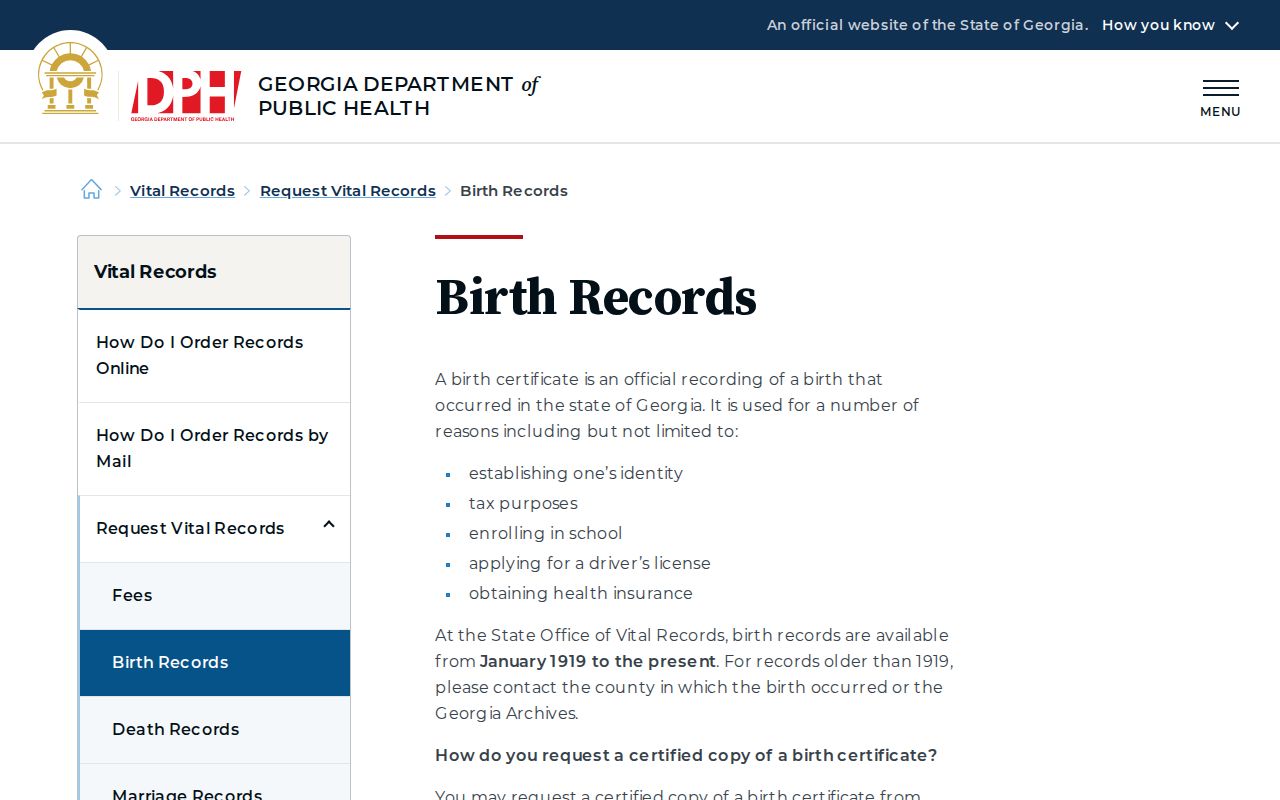
That distinction matters: a failed open-records email does not replace the DPH form, proof of relationship, acceptable identification, and prepaid fee. DPH keeps marriage records from June 1952 through August 1996; Clarke Probate Court is the fallback outside that range. Divorce records remain with the Superior Court that granted the divorce.
Eligibility limit. Certified vital records can remain restricted even when older records about the same family appear in archives, probate books, or newspapers.
Athens Sheriff Records and Jail Data
The current Clarke jail list is an alphabetical browse showing a name, booking time, birth year, bond, case or police number, and only the first charge. It is unofficial and does not prove a final court disposition. Georgia Department of Corrections and the GBI registry are separate state systems with their own scope and withheld fields.
The Clarke sheriff civil-record search accepts a name or case number, including partial-name input.
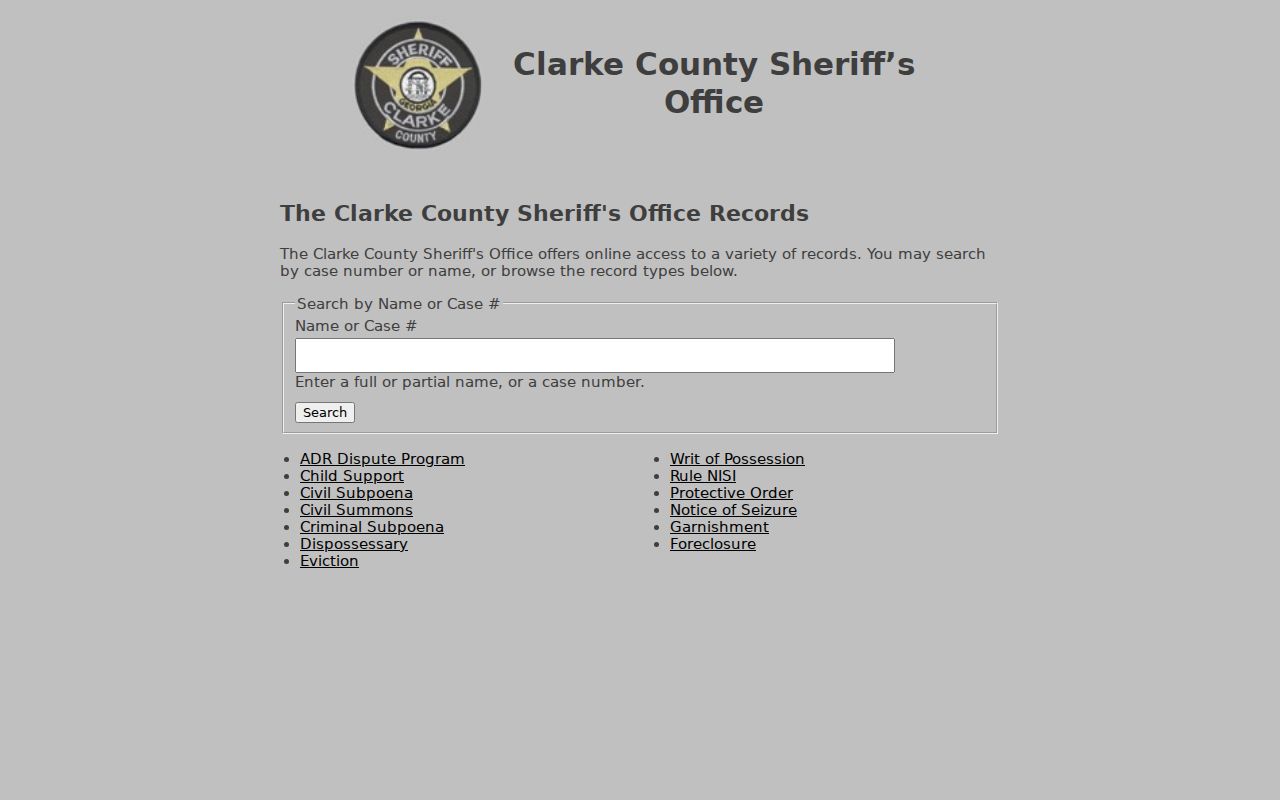
The screen can help locate civil service activity, but sensitive categories such as protective orders require care. Result fields were not verified. Ask the Sheriff for an official copy, and use the court clerk for the docket, pleadings, order, or disposition.
Athens Police Records Use GovQA
Police and Corrections requests do not go through the same route as general unified-government files. Useful request details include an incident or report number, incident date and location, names of people involved, date of birth when relevant, and whether the request concerns an incident, vehicle accident, or another record. Protected victim, juvenile, investigative, and personal details may be redacted.
The current Athens-Clarke Police and Corrections GovQA portal is the documented online request channel.
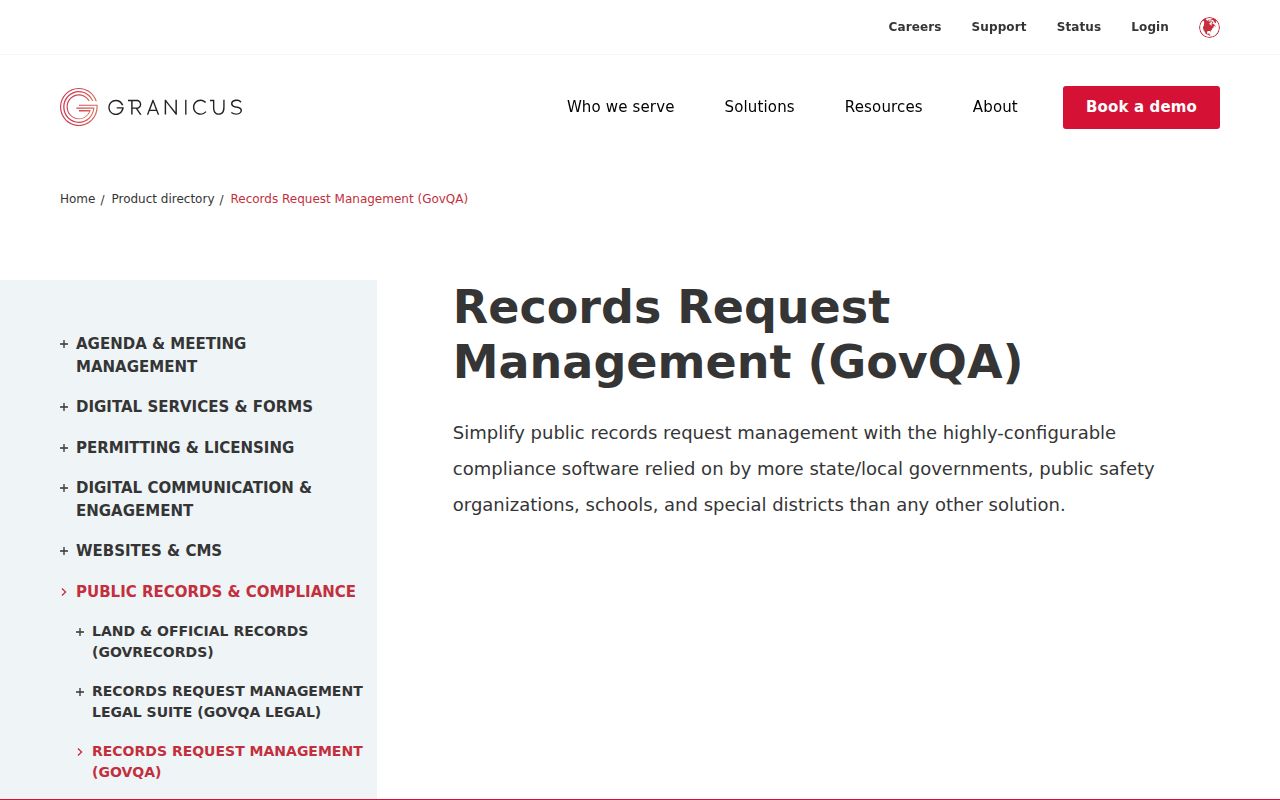
The portal routes a defined request; it does not promise that every report is open or that the agency will create a new report. For records held by the Sheriff, courts, Tax Commissioner, or another constitutional office, contact that custodian instead.
Note: Describe the record that already exists rather than asking an agency to research events or answer a broad question.
Control Athens Records Request Costs
Under the Georgia Open Records Act, an agency may charge reasonable search, retrieval, redaction, and direct administrative costs based on its lowest-paid qualified employee. The first 15 minutes of staff time should be free. Paper copies commonly cost ten cents per page, and electronic delivery should be used where practical. Prepayment generally applies when an estimate exceeds $500 or an earlier bill remains unpaid.
Ask for an itemized advance estimate. Narrow the office, person or address, record category, and date span when the amount is high. Request an existing electronic export if one can be produced without significant programming. Magistrate fee versions conflict in the official material, with listed totals ranging from $2 for an uncertified docket or judgment to differing whole-file amounts. Confirm the present charge before sending payment.
File an Athens Records Request
Any person may request records under O.C.G.A. §50-18-70 et seq., and an agency generally cannot demand a purpose before accepting the request. The response is due within three business days. If production takes longer, the written reply should provide timing, estimated cost, and the precise Code authority for anything withheld. Athens-Clarke separated online routing by custodian in 2026, making office selection a key first step.
- Identify the keeper. Use the clerk for deeds or court files, General II for planning and permits, GovQA for Police and Corrections, and the tax officer for assessor or tax records.
- Describe an existing record. Include names and variants, address, case or document number, record type, and a focused date range.
- Choose the form. State whether an index entry, electronic copy, ordinary image, or certified copy is needed.
- Ask for the estimate. Request the lowest-cost electronic method and approval before charges exceed a stated amount.
- Review the reply. If material is withheld, ask for the exact exemption and release of reasonably separable non-exempt portions.
The Athens-Clarke open-records routing page separates Police/Corrections, Sheriff, Tax, General I, and General II channels. A specific denial may be taken to the Georgia Attorney General's open-government process or superior court. Often the fastest fix is a narrower request that names the record, office, and dates with care.
Lawful personal use. Open access never permits stalking, harassment, intimidation, or harm. Handle addresses and sensitive case details with care.